
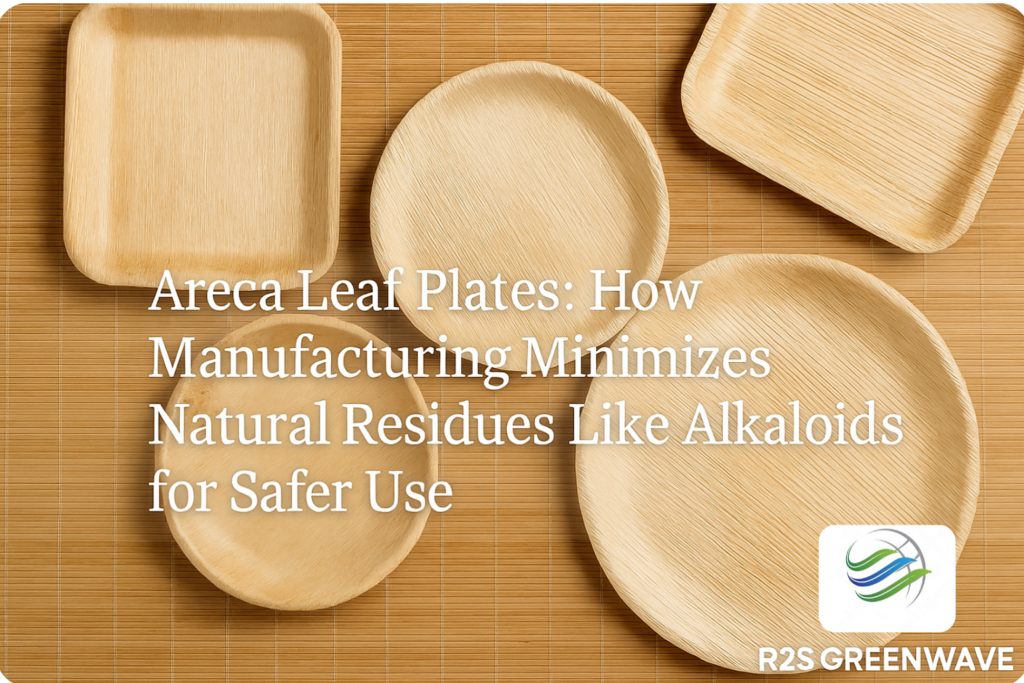
When it comes to eco-friendly alternatives in tableware, Areca leaf plates have carved out a significant place in global markets. Their natural origin, biodegradability, and elegant appeal make them a popular replacement for single-use plastics. But as with any product that comes into contact with food, questions about safety and residues are important. One such concern is the presence of natural alkaloids—compounds found in many plant leaves.
This is where the manufacturing process plays a critical role. Proper sourcing, cleaning, and heat pressing of Areca leaves ensures that potential natural residues like alkaloids are minimized, making these plates not only sustainable but also safe for everyday use. At R2S GREENWAVE, we believe that caring for the planet also means caring for the people who use our products—which is why we ask deeper safety questions and ensure our processes reflect global best practices.
Why Natural Residues Are a Concern
Plant-based products, including Areca palm leaves, naturally contain compounds such as tannins, polyphenols, and sometimes alkaloids. While these compounds are part of the leaf’s natural defense system, prolonged or unregulated exposure in food contact items could raise questions about migration into food.
The truth is, most of these residues are reduced or eliminated during traditional processing steps like washing, sun drying, and heat pressing. Scientific migration studies and heavy metal screenings have consistently shown that Areca plates are safe for direct food contact, with compliance to major food safety standards like EU Regulation (EC) 1935/2004 and US FDA guidelines.
How Manufacturing Minimizes Residues
The manufacturing process of Areca leaf plates is thoughtfully designed to ensure hygiene, quality, and safety:
1. Leaf Collection & Sorting
Only naturally fallen, mature Areca palm leaves are collected. Leaves that are too young or damaged (which may contain more plant compounds) are discarded. This careful sorting reduces variability in chemical composition.
2. Washing to Remove Surface Compounds
Each leaf is thoroughly washed with clean water to remove dust, soil, and surface-level organic compounds. This step helps reduce extractables and natural residues that could otherwise transfer during use.
3. Sun Drying or Oven Drying
Drying plays a critical role. Moisture reduction not only prevents fungus formation but also reduces residual alkaloid activity. Studies on plant processing show that drying naturally degrades many of these compounds, making the leaf more stable.
4. Heat Pressing
The washed and dried leaves are heat-pressed into shape at temperatures above 120°C. This step is crucial: heat denatures many natural plant alkaloids and tannins, significantly lowering their extractability. It also sterilizes the product, ensuring it is hygienic for food contact.
5. Final Inspection & Packaging
Plates are visually checked for defects and then packed in moisture-controlled packaging, ensuring that they stay safe, clean, and ready for use
Evidence from Migration & Safety Tests
Globally, Areca plates have been subjected to tests including:
- Food Contact Migration Tests (EU & FDA protocols)
- Heavy Metal Screening (lead, cadmium, arsenic, mercury—all within safe limits)
- Microbiological Safety Tests (ensuring no harmful bacteria or fungi)
The results? Areca leaf plates consistently meet international safety standards, proving that the careful processing steps effectively minimize residues like alkaloids and make them safe for consumers.
Why This Matters for Eco-Friendly Brands
In an era where eco-friendly products are booming, consumers are no longer satisfied with just “green” claims. They want assurance of safety, quality, and scientific backing. By addressing concerns about natural residues transparently, brands build deeper trust.
At R2S GREENWAVE, we position ourselves not just as sellers of Areca plates but as a solution-driven eco-brand. We care enough to ask:
- How safe are these products for long-term use?
- What steps can reduce even trace levels of natural compounds?
- How can we exceed—not just meet—global safety standards?
By raising and addressing these questions, we empower importers, distributors, and eco-conscious buyers with confidence in choosing Areca plates.
The Bigger Picture: Safe, Sustainable, and Responsible

Areca leaf plates are more than just disposable dinnerware. They represent a sustainable lifestyle choice—a way to reduce plastic waste while connecting with nature. And when manufactured with care, they provide both eco-friendliness and food safety.
The lesson is clear: Sustainability and safety must go hand in hand. By refining processes that minimize natural residues like alkaloids, Areca plates stand as proof that plant-based products can be both safe and planet-friendly.
Final Word
The journey from leaf to plate is not just about shaping dinnerware; it’s about shaping a safer, greener future. Thanks to careful manufacturing, Areca leaf plates minimize natural residues and pass strict global safety tests.
At R2S GREENWAVE, we’re proud to lead this movement—not only by offering eco-friendly plates but by committing to deeper scientific inquiry and global safety practices. Because true sustainability means caring about every detail, from the environment to the health of the people we serve.
References & Sources
- European Commission – Food Contact Materials (Regulation EC 1935/2004)
- US FDA CFR 21 §177.1520 – Olefin Polymers for Food Contact Applications
- International Journal of Food Science – Safety Evaluation of Areca Leaf Plates (Migration & Heavy Metal Tests)
- Food Packaging Forum – Plant-based Packaging Safety Assessment
- ResearchGate: Food Safety Testing of Areca Leaf Plates (screenings and migration studies)