
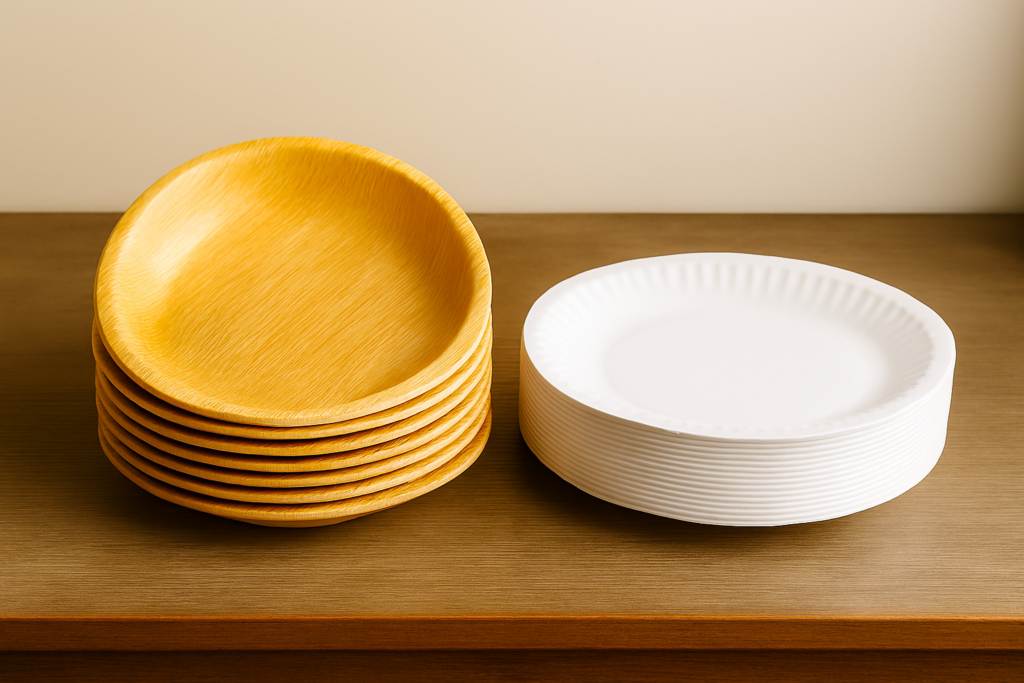
When it comes to eco-friendly disposable plates, two popular choices dominate the conversation: areca leaf plates and paper plates. Both are marketed as biodegradable alternatives to plastic or Styrofoam, but the question remains — which one is truly sustainable and better for the planet? In this blog, we’ll break down the environmental impact, production process, and end-of-life disposal of both options to help you make the best choice for a greener lifestyle.
What Are Areca Leaf Plates?
Areca leaf plates are made from naturally fallen leaves of the Areca palm tree. No trees are cut down during production — the leaves are simply collected, cleaned, heat-pressed into shape, and sterilized. This process requires minimal water and zero chemicals, making these plates one of the most eco-friendly dinnerware options available today.
Because they are sturdy, leak-proof, and heat-resistant, areca plates are often used in weddings, catering events, restaurants, and eco-conscious households. Best of all, they are 100% biodegradable and compostable, breaking down within 6–8 weeks without releasing toxins.
What Are Paper Plates?
Paper plates, on the other hand, are usually made from wood pulp or recycled paper. While they sound environmentally friendly, the reality is more complex. Most paper plates are coated with plastic or wax to make them water-resistant, which means they are not easily biodegradable or compostable.
Producing disposable paper plates also requires cutting down trees, consuming large amounts of water, and using bleaching agents or chemicals to make them food-safe. Even when made from recycled material, the production process often adds to carbon emissions and deforestation concerns.
Comparing the Environmental Impact
1. Raw Materials
- Areca Leaf Plates: Made from naturally shed leaves — no deforestation.
- Paper Plates: Require trees to be cut down, contributing to forest loss and wildlife habitat destruction.
2. Production Process
- Areca Plates: Minimal energy, no chemicals, very low carbon footprint.
- Paper Plates: Energy-intensive, involves water consumption, bleaching, and coating with chemicals.
3. Durability and Usability
- Areca Leaf Plates: Strong, heat-resistant, can hold hot curries and oily foods without leaking.
- Paper Plates: Weaker, often become soggy with liquids unless coated (which makes them less eco-friendly).
4. End-of-Life Disposal
- Areca Plates: Fully compostable and biodegradable; return to soil as organic matter.
- Paper Plates: If coated, they are not recyclable or compostable. They often end up in landfills where they take years to decompose.
Health and Safety
Another factor often overlooked is food safety. Areca leaf dinnerware is made without chemicals or artificial coatings, so it’s safe to serve both hot and cold foods. In contrast, paper plates often contain wax, plastic, or even PFAS (forever chemicals) that can leach into food when exposed to heat.
If you’re looking for non-toxic biodegradable plates, areca plates are the clear winner.
Cost and Availability
Some argue that paper plates are cheaper and more widely available. While this is true in the short term, the growing demand for sustainable products has made areca leaf plates wholesale options more accessible. Today, eco-conscious caterers, restaurants, and individuals are shifting towards eco-friendly disposable plates even if they cost slightly more, because the long-term environmental benefits far outweigh the small price difference.
Which One Should You Choose?
If your priority is convenience alone, paper plates may seem like the easier option. But if you’re serious about sustainable living, reducing waste, and making a positive impact on the planet, areca leaf plates are the better choice by far. They are:
- Eco-friendly and biodegradable
- Sturdy and safe for food contact
- Made without chemicals
- A zero-waste solution
Conclusion
When comparing areca leaf plates vs. paper plates, it’s clear that one is far more sustainable than the other. Areca plates require no deforestation, minimal processing, and decompose naturally without harming the environment. On the other hand, most paper plates are resource-intensive to produce, often coated with plastics, and harmful to both the planet and human health.
As individuals, businesses, and communities become more aware of eco-friendly alternatives to disposable plates, the shift toward areca leaf dinnerware is gaining momentum worldwide. Next time you host an event or look for sustainable packaging solutions, remember: choosing biodegradable areca leaf plates over paper plates is a small decision that makes a big difference for our planet.