
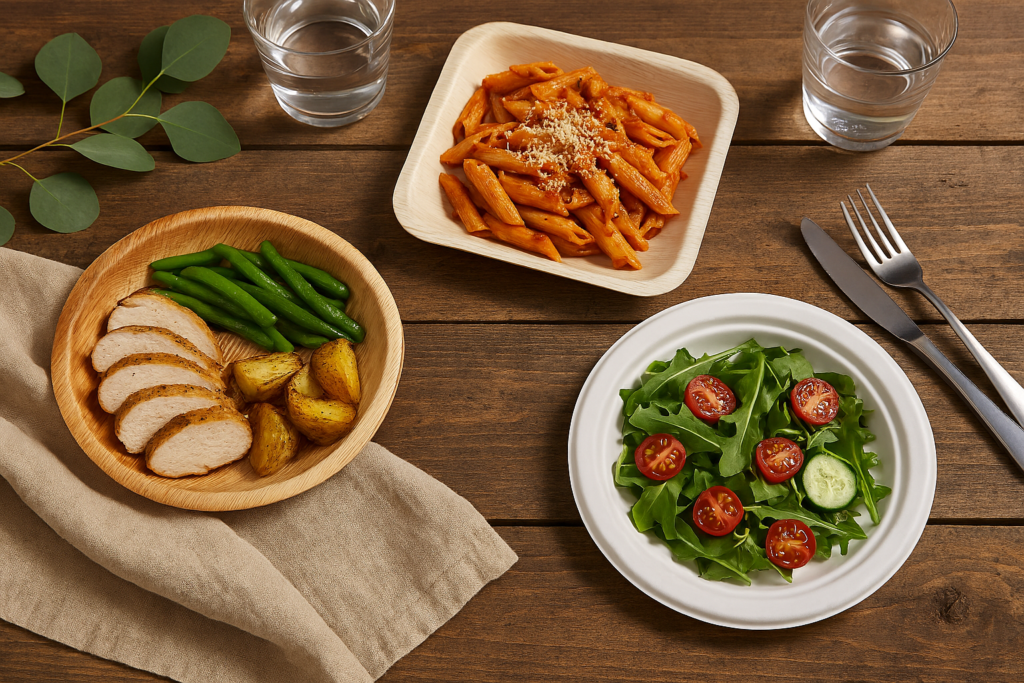
As the world shifts toward sustainable living, the demand for eco-friendly disposable plates has never been higher. With increasing bans on single-use plastics, businesses and individuals are exploring greener options such as areca leaf plates, bagasse plates, and paper plates. Each of these alternatives is marketed as biodegradable and compostable, but which one is truly the most eco-friendly dinnerware?
Let’s dive into a detailed comparison of these three popular options based on their raw materials, production process, durability, and environmental impact.
What Are Areca Leaf Plates?
Areca leaf plates are made from naturally shed leaves of the Areca palm tree. No trees are cut down — the leaves are collected, cleaned, and molded into shape using heat and pressure. This process uses minimal water and no chemicals, making areca plates one of the purest forms of biodegradable tableware.
They are sturdy, heat-resistant, and can hold oily or liquid foods without leakage. Being 100% compostable plates, they return to the soil within weeks, leaving behind no toxic residue.
What Are Paper Plates?
Paper plates are perhaps the most familiar option. They are made from wood pulp or recycled paper, and often coated with wax or plastic to prevent leakage. While marketed as eco-friendly, most paper plates are not easily compostable or recyclable due to these coatings.
The production of paper plates also contributes to deforestation, high water usage, and carbon emissions, especially when virgin wood pulp is used.
Comparing Eco-Friendly Plates: Areca vs. Bagasse vs. Paper
To understand which is the best choice, let’s break it down into categories.
1. Raw Materials
- Areca Leaf Plates: Made from naturally fallen palm leaves. No cutting of trees, no waste.
- Bagasse Plates: Made from sugarcane residue (a byproduct), reducing agricultural waste.
- Paper Plates: Made from trees or recycled paper; often contributes to deforestation.
2. Production Process
- Areca Plates: Simple, low-energy process with no chemicals.
- Bagasse Plates: Requires pulping, water, and energy; involves chemical treatments.
- Paper Plates: Energy-intensive, uses water and bleaching chemicals, plus plastic/wax coatings.
3. Durability & Usability
- Areca Leaf Plates: Strong, heat-resistant, safe for hot and oily foods.
- Bagasse Plates: Durable, suitable for hot food, slightly less sturdy than areca.
- Paper Plates: Weak, easily soggy without coatings; not suitable for heavy meals.
4. End-of-Life Disposal
- Areca Plates: 100% biodegradable and compostable in home compost bins.
- Bagasse Plates: Compostable but often require industrial composting for faster breakdown.
- Paper Plates: Coated plates are not recyclable or compostable; end up in landfills.
Environmental Impact
- When considering eco-friendly dinnerware, areca leaf plates have the lowest environmental impact. Their production requires minimal resources and they return to the soil quickly.Bagasse plates are a good second option since they make use of waste materials, but the energy and chemicals used in processing slightly reduce their sustainability score.Paper plates, though familiar and cheap, are the least eco-friendly. Their production often involves cutting down trees, and their coating makes them difficult to compost.
Health & Safety Factor
- Food safety is another important point. Areca plates are made without any additives or toxins, making them safe for serving hot curries, oily foods, and even desserts.Bagasse disposable plates are safe too but may sometimes contain trace chemicals from processing.Paper plates often contain wax, plastic, or harmful chemicals like PFAS, which can leach into food when exposed to heat.
Cost and Availability
- Areca Leaf Plates: Slightly more expensive than paper, but increasingly available through eco-friendly suppliers and exporters.
- Bagasse Plates: Moderately priced, widely used by restaurants and food chains.
- Paper Plates: Cheapest and widely available, but environmentally costly.
Final Verdict: Which Plate Is Truly Eco-Friendly?
If you want the most sustainable option, areca leaf plates come out on top. They are:
- Made from natural fallen leaves (zero deforestation).
- Produced with no chemicals and low energy.
- 100% biodegradable and compostable within weeks.
- Strong, reusable for light purposes, and safe for all kinds of foods.
Bagasse plates are a close second, offering a good balance of sustainability and durability. Paper plates, while convenient, are the least eco-friendly and should be avoided whenever possible.
Conclusion:
When comparing areca vs. bagasse vs. paper plates, the winner is clear: areca leaf dinnerware is the most eco-friendly, followed by bagasse biodegradable plates, while paper plates lag far behind.
As businesses, caterers, and households move toward eco-friendly disposable plates, the choice we make today will shape a more sustainable tomorrow. Choosing biodegradable areca plates is not just a practical decision — it’s a step toward protecting our planet.