
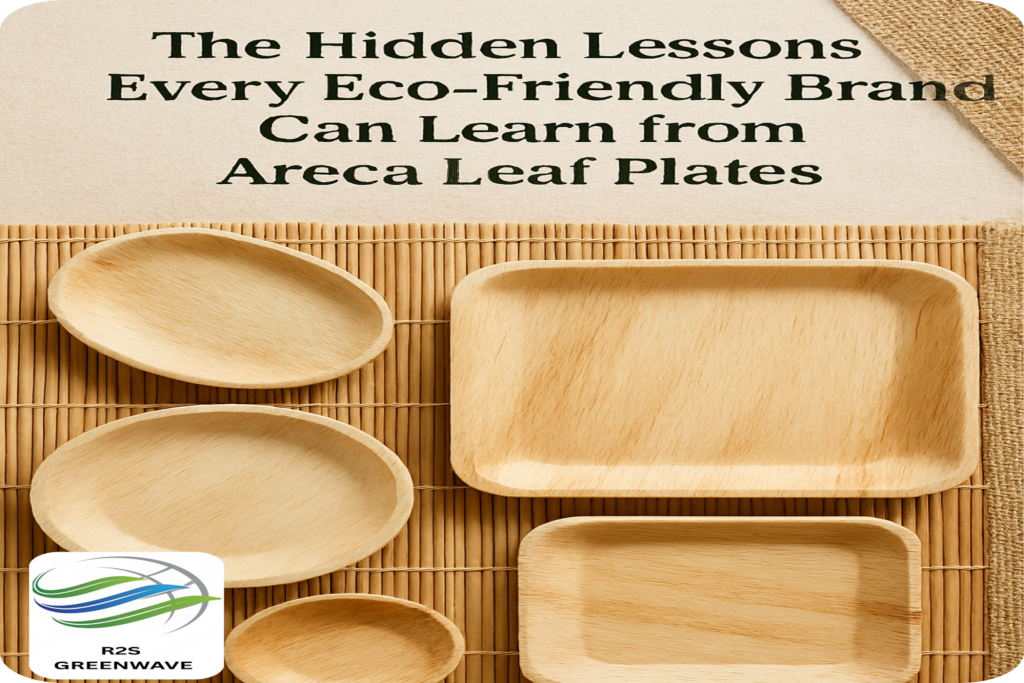
In the global movement toward sustainable living, few products have captured attention as quickly as areca leaf plates. Made from naturally fallen palm leaves, they tick all the right boxes—eco-friendly, biodegradable, renewable, and safe for food contact. Yet, their journey in international markets hasn’t always been smooth.
Some countries have welcomed them wholeheartedly, while others have introduced stricter regulatory hurdles. For eco-friendly entrepreneurs, policymakers, and sustainable product innovators, this story carries hidden lessons worth paying attention to.
Here are the five most important takeaways every green brand can learn from areca plates.
Lesson 1: Sustainability Alone Isn’t Enough

A product being natural or biodegradable isn’t enough to guarantee smooth entry into every market. Today’s global trade requires scientific validation, compliance with safety standards, and internationally recognized certifications.
Lesson 2:Clear communication prevents misunderstandings
A surprising reason for the confusion around areca plates is the term itself. Many regulators and consumers have mistaken them for being derived from the areca nut (which is linked to health risks), when in reality, they are made from fallen leaves of the areca palm—a completely different raw material.
👉 Takeaway for brands: Never assume people understand your product. Educate clearly and
consistently. Your packaging, marketing, and certifications should leave no room for doubt.
Lesson 3: Regulations Can Change Overnight
The global market for eco-friendly products is evolving fast. One year, a product may enjoy open acceptance; the next, new testing requirements or import restrictions may come into force.
Areca leaf plates are a classic example. While accepted widely in Europe and Asia, North America has imposed stricter standards, creating uncertainty for exporters.
👉 Takeaway for brands: Build resilience by staying informed, updating certifications, and planning for regulatory shifts. Proactivity is key to survival in green markets.
Lesson 4: Collaboration Strengthens Credibility

No eco-brand succeeds in isolation. When challenges arise—be it scientific doubts, policy shifts, or trade barriers—collaboration among manufacturers, exporters, researchers, and certification bodies becomes essential.
Takeaway for brands: Collaboration builds credibility and collective influence. The stronger the network, the more resilient the eco-business ecosystem becomes.
Lesson 5: Diversification is Key to Longevity
Depending on a single product or market is risky. Areca plates have proven popular in weddings, restaurants, catering, and retail—but when one region tightens regulations, businesses that lack diversification struggle.
Takeaway for brands: Explore multiple markets and multiple product lines. Resilience comes from spreading risk, not putting all resources in one basket.
At R2S GREENWAVE, we believe the story of areca leaf plates is not a setback but an opportunity. Each challenge has only made us more determined to build robust, compliant, and future-ready eco-products.
Our approach is simple:
Invest in rigorous testing and certification
Communicate with transparency and clarity
Partner with global distributors and collaborators
Expand our portfolio beyond areca plates into holistic sustainable solutions
By doing so, we ensure that our customers and partners don’t just buy a product—they join a movement toward a truly circular, green economy.
Final Thoughts
The journey of areca plates highlights one powerful truth: sustainability must be matched with credibility.
For eco-friendly brands worldwide, the hidden lessons are clear—validate your claims, educate your audience, prepare for change, collaborate widely, and diversify smartly.
At R2S GREENWAVE, we see these lessons not as obstacles but as guiding principles to build a stronger, greener tomorrow.
eco@r2sgreenwave.com | www.r2sgreenwave.com