
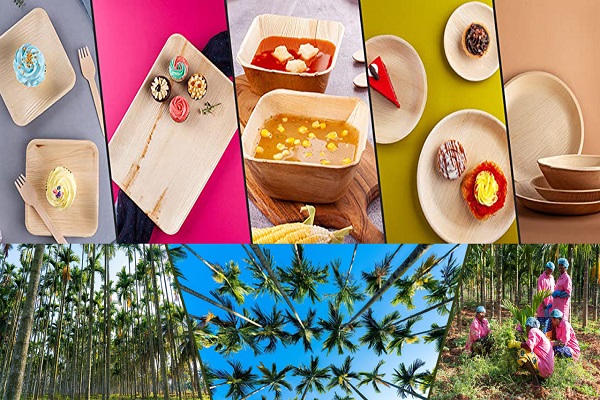
Have you ever wondered how arecanut leaf plates are made? The process is as natural as the product itself, involving minimal intervention and no harmful chemicals. Let’s take a closer look at the journey of these eco-friendly plates from palm to plate.
Step 1: Collection of Fallen Leaves
The process begins with the collection of naturally fallen areca palm leaves. These leaves are gathered from plantations without harming the trees, making the process sustainable.
Step 2: Cleaning and Sanitizing
The collected leaves are thoroughly cleaned and sanitized to remove any dirt or debris, ensuring that they are safe for use.
Step 3: Heat Pressing
The clean leaves are then placed in molds and heat-pressed into various shapes and sizes. This process is entirely natural, without the use of chemicals, dyes, or bonding agents.
Step 4: Quality Check and Packaging
After molding, the plates undergo a quality check to ensure they meet the required standards. Once approved, they are packed and ready for distribution.
A Truly Natural Product
The entire process of making arecanut leaf plates is rooted in sustainability, from the collection of fallen leaves to the final product. These plates are a testament to the power of nature and human ingenuity, offering a truly natural and eco-friendly alternative to traditional disposable tableware.