 +91-9972 9926 11 / 7676 8932 33
 contact@r2sgreenwave.com / eco@r2sgreenwave.com

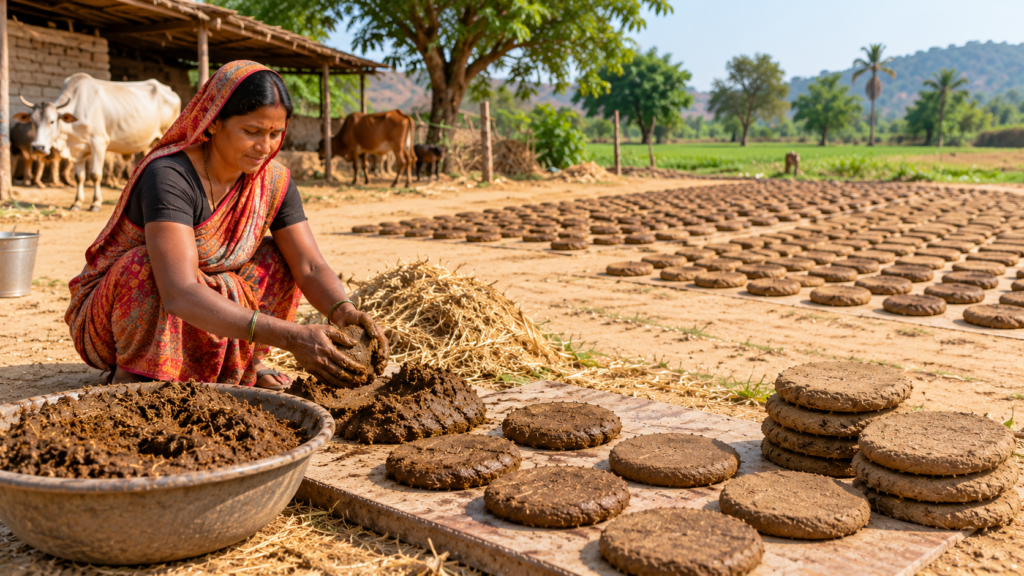
For centuries, cow dung cakes have been used in rural India as a traditional source of fuel. Known locally as gobar cakes, these naturally prepared fuel products are made by shaping collected cow dung and allowing it to dry naturally under sunlight.
But how are cow dung cakes made?
The process is relatively simple, yet each stage—from responsible collection to proper sun-drying—plays an important role in producing well-formed, dry and usable cow dung cakes.
For international buyers exploring natural biomass fuel and traditional Indian products, understanding the production process provides useful insight into how these products are prepared.
What Are Cow Dung Cakes?
Cow dung cakes are traditionally made by hand using fresh cow dung, which is shaped into flat or rounded forms and dried naturally.
They are also commonly called gobar cakes or cow dung fuel. Once adequately dried, they can be used in traditional applications such as household heating and certain cultural or ceremonial practices, depending on local customs and regulations.
Unlike manufactured fuel products, sun-dried cow dung cakes are made from a naturally available agricultural material and generally have a rustic appearance with variations in shape, texture and colour.
Step 1: Collection of Cow Dung
The first stage in the cow dung cake making process is the collection of suitable cow dung.
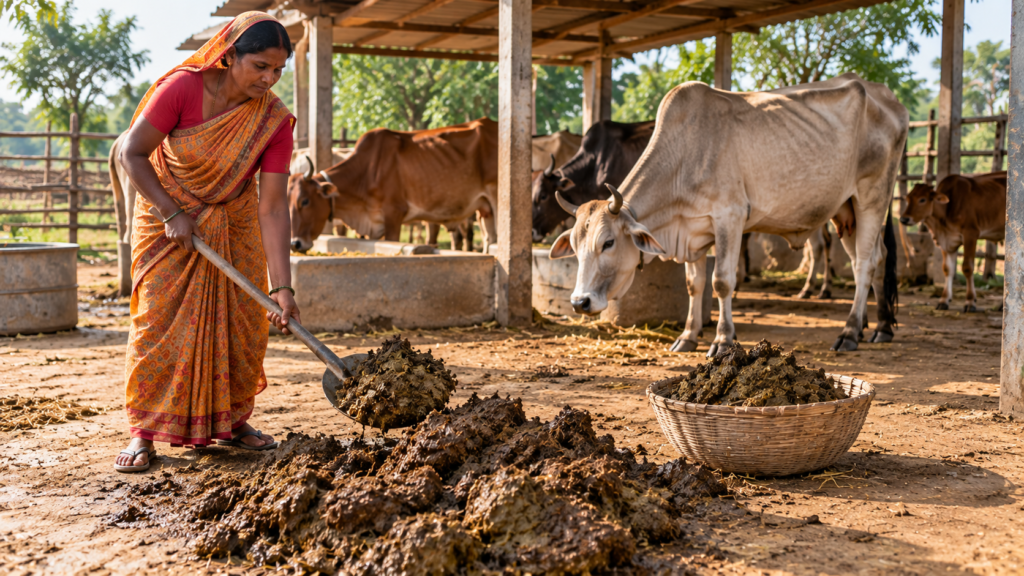
Fresh cow dung is collected from cattle areas using traditional or practical collection methods. Careful handling at this stage helps keep unwanted materials such as stones, plastic or other debris away from the material.
For commercial preparation, consistency in raw-material handling is important because the quality and appearance of the finished cow dung cakes can vary depending on the source material and preparation practices.
Step 2: Preparation and Mixing
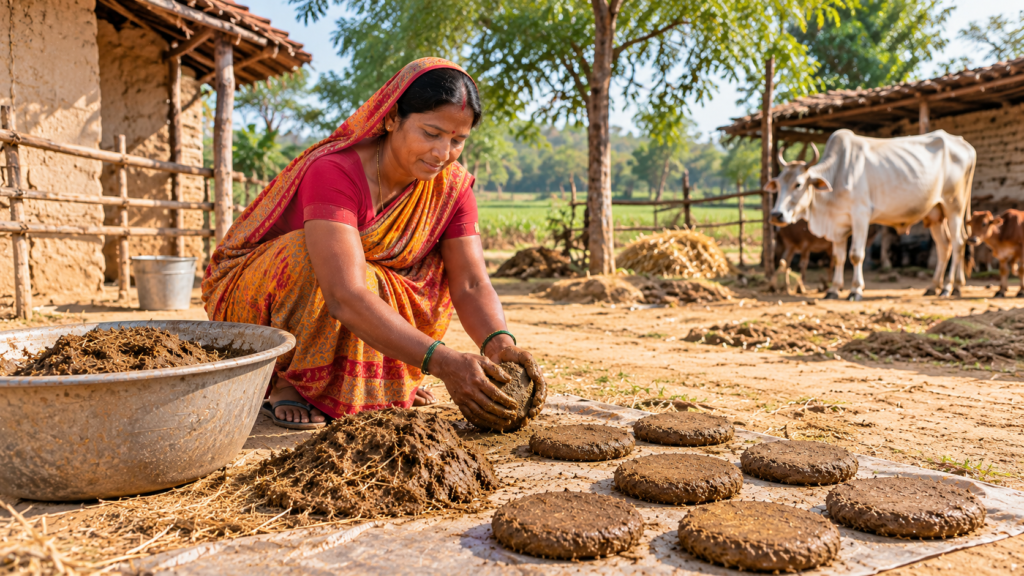
After collection, the cow dung may be prepared to achieve a workable consistency.
Depending on traditional practice, natural fibrous agricultural material such as straw may sometimes be incorporated. The purpose is to create a cohesive mixture that can be shaped more easily.
The material is worked until it reaches a suitable consistency for forming.
This stage is particularly important in cow dung cake production, because an overly wet or inconsistent mixture can make shaping and drying more difficult.
Step 3: Shaping the Cow Dung Cakes
The prepared material is then shaped into individual cakes.
Traditionally, this is done by hand. A portion of the prepared material is pressed and flattened into a generally round or slightly irregular shape.
The exact size and thickness can vary according to local practice and intended application.
Authentic Indian cow dung cakes are not necessarily perfectly uniform. Natural variations in colour, surface texture, edges and thickness are normal characteristics of a traditionally prepared product.
This handmade appearance is part of what distinguishes gobar cakes from highly processed manufactured fuel products.
Step 4: Arranging the Cakes for Drying
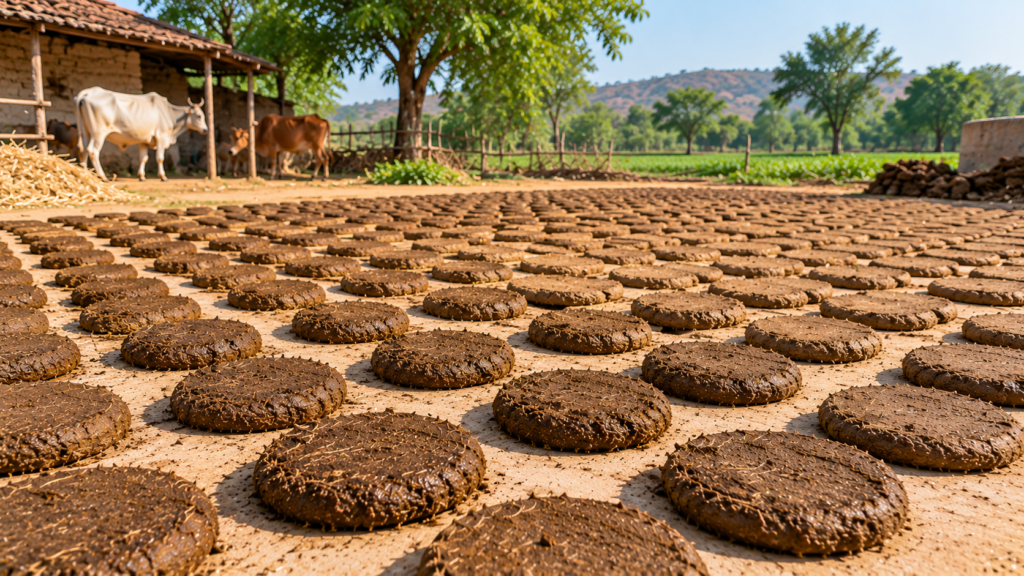
Once shaped, the cakes are arranged in an appropriate open area for drying.
Good spacing and exposure to air and sunlight are important. The cakes need sufficient surface exposure to allow moisture to escape.
Traditionally, they may be placed on clean outdoor surfaces or suitable drying areas.
The exact drying arrangement depends on local conditions, available space and weather.
Step 5: Sun-Drying
Sun-drying cow dung cakes is one of the most important stages of the traditional process.
The shaped cakes are exposed to natural sunlight and air for an appropriate period. Drying time can vary considerably depending on weather, humidity, sunlight, cake thickness and local conditions.
During drying, moisture gradually evaporates from the material, leaving a considerably drier product.
In regions with strong sunlight and suitable weather, natural drying can be particularly practical. However, rainy or highly humid conditions can significantly increase drying time.
Properly managed sun-dried cow dung cakes should be sufficiently dry for their intended application before being packed or stored.
Step 6: Inspection, Handling and Storage
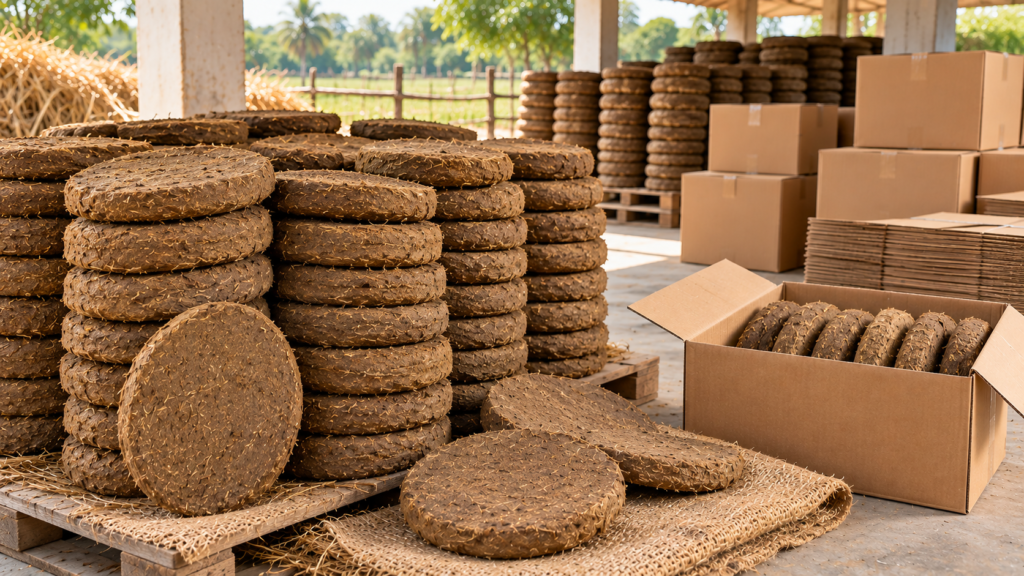
After drying, the cakes can be inspected for obvious physical issues before packing.
For commercial supply, careful handling of cow dung cakes is important because dried products can be relatively fragile. Excessive pressure, dropping or unsuitable storage conditions may cause breakage.
Finished products should therefore be stored in a dry, protected environment until they are ready for packaging and shipment.
For exporters, appropriate packaging is particularly important when preparing cow dung cakes for international buyers, as the product needs to withstand handling and transportation while maintaining its intended condition.
From Traditional Practice to Global Supply
The cow dung cake making process may appear simple, but producing a commercially suitable product requires attention to raw-material handling, shaping, drying, inspection, storage and packaging.
For buyers interested in natural biomass fuel, gobar cakes represent a traditional Indian product with a long history of use.
At R2S GREENWAVE, our focus is on connecting international buyers with naturally sourced Indian products while maintaining clear communication about product characteristics, preparation and export requirements.
Whether you are sourcing cow dung cakes, natural biomass fuel or other sustainable Indian products, understanding how a product is made is an important first step toward responsible B2B sourcing.
Frequently Asked Questions
How are cow dung cakes made?
Cow dung cakes are made by collecting cow dung, preparing it to a workable consistency, shaping it into cakes and naturally sun-drying cow dung cakes until sufficiently dry.
What are cow dung cakes called in India?
They are commonly known as gobar cakes or uplas in different parts of India.
How long does it take to sun-dry cow dung cakes?
There is no single fixed drying period. Drying time depends on sunlight, humidity, rainfall, temperature, thickness and other local conditions.
Are cow dung cakes a natural biomass fuel?
Yes. Traditionally prepared cow dung cakes are a form of biomass fuel made from animal dung and are used in various traditional applications.