 +91-9972 9926 11 / 7676 8932 33
 contact@r2sgreenwave.com / eco@r2sgreenwave.com


Areca leaf plates have become increasingly popular as an alternative to conventional disposable tableware. Made from naturally fallen areca palm leaves, these products combine traditional raw materials with modern processing techniques to create attractive natural tableware for restaurants, caterers, retailers, events and international B2B markets.
But how are areca leaf plates made?
The process is more than simply pressing a leaf into a mould. Proper areca leaf plate manufacturing involves careful collection, cleaning, drying, heat pressing, trimming, inspection and packaging.
What Are Areca Leaf Plates?
Areca palm leaf plates are made primarily from naturally shed areca palm sheaths. The fallen leaf material is collected, cleaned and processed into plates, bowls, trays and other forms of areca palm leaf tableware.
Unlike conventional plastic tableware, the finished products retain the natural appearance and texture of the palm leaf. Each piece can therefore have subtle variations in colour, grain and surface pattern.
How Are Areca Leaf Plates Made?
The basic areca leaf plate manufacturing process generally follows several stages.
1. Collection of Naturally Fallen Leaves
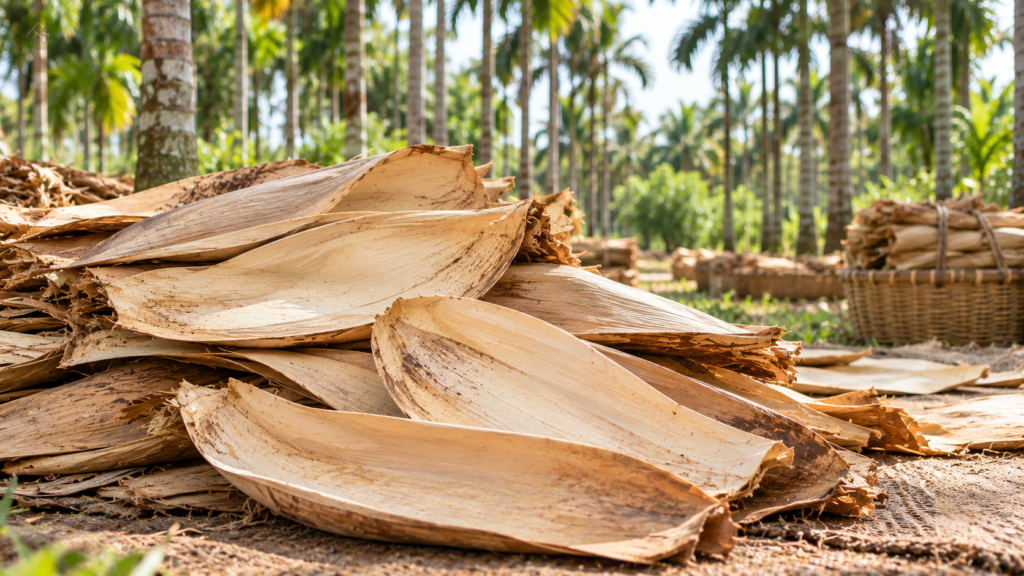
The process begins with the collection of naturally fallen areca palm leaf sheaths.
The suitable sheaths are selected based on their size, condition and suitability for processing. Using naturally fallen material is an important characteristic of this type of natural tableware production.
2. Cleaning the Leaf Sheaths
Collected leaf sheaths are carefully cleaned to remove dirt, dust and other surface contaminants.
Cleaning is an important preparation step because the final product should have a clean and presentable natural surface.
3. Drying and Conditioning
After cleaning, the leaf material is dried and conditioned appropriately.
Moisture management is important because the material needs to be suitable for the subsequent heat-pressing process. Properly prepared leaf sheaths can also help achieve better shape and consistency during moulding.
4. Heat Pressing and Moulding
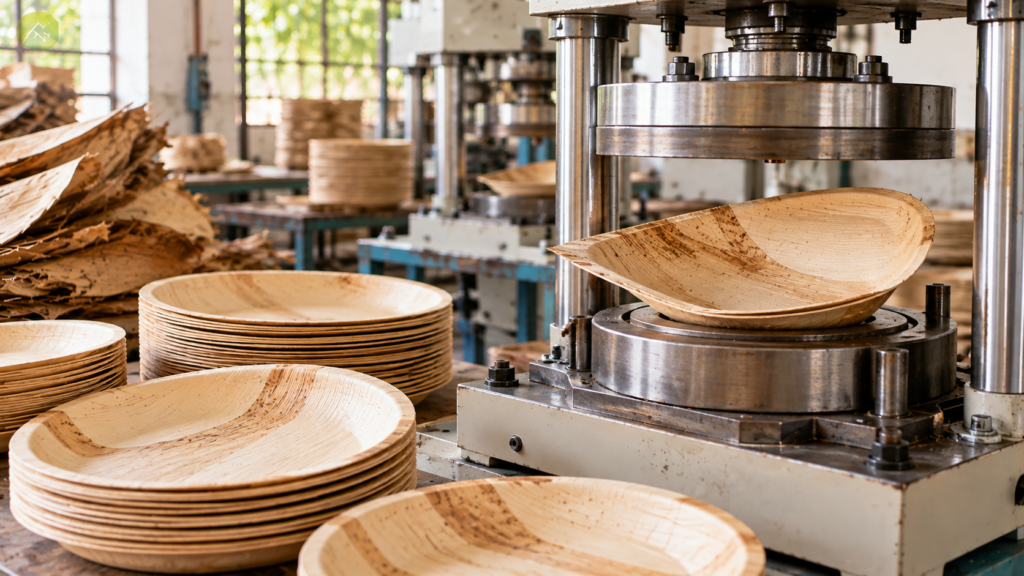
This is the key stage of areca leaf plate production.
The prepared leaf sheath is placed into a suitable mould and subjected to controlled heat and pressure. The combination of temperature, pressure and mould shape forms the natural material into the required product.
Different moulds can be used to produce:
- Round areca leaf plates
- Square plates
- Rectangular plates
- Compartment plates
- Bowls
- Serving trays
- Other food-service formats
The natural grain and markings of the leaf remain visible, giving every piece a distinctive appearance.
5. Trimming and Finishing
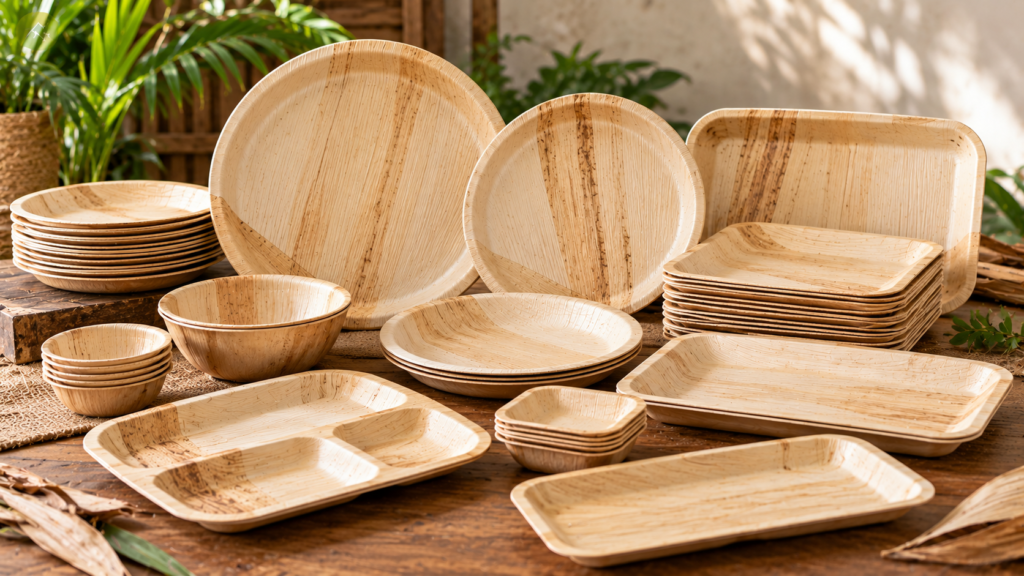
Once the product has been moulded, excess material around the edges can be trimmed.
The finished piece is checked for shape, edges, surface condition and overall presentation. Good areca leaf tableware should have a clean form while retaining its authentic natural appearance.
6. Quality Inspection
Quality inspection is an important part of areca leaf plate manufacturing.
Depending on the intended market, products may be inspected for factors such as:
- Shape and dimensional consistency
- Cracks or excessive splits
- Edge condition
- Surface cleanliness
- Structural integrity
- Overall appearance
For B2B buyers, consistent quality becomes particularly important when products are supplied in larger quantities.
Why Does Every Areca Leaf Plate Look Slightly Different?
One of the defining characteristics of areca palm leaf tableware is its natural variation.
Because the products originate from natural leaf material, differences in colour, grain patterns, texture and markings can occur. These variations are not necessarily defects; they are part of the natural character of the material.
This is also why natural leaf plates have a different visual appeal from mass-produced synthetic tableware.
Are Areca Leaf Plates Biodegradable?
Areca leaf tableware is made from natural plant-based material and is generally regarded as biodegradable tableware under suitable environmental conditions.
However, the exact rate and manner of decomposition depends on factors such as moisture, temperature, microorganisms and disposal conditions.
Therefore, responsible businesses should avoid presenting biodegradability as meaning that every product will disappear immediately under all environmental conditions.
Are Areca Leaf Plates Sustainable?
The appeal of sustainable tableware comes partly from the use of naturally fallen agricultural material rather than relying on conventional plastic as the primary raw material.
The overall environmental impact, however, depends on the complete supply chain—including collection, processing, packaging, transportation and disposal.
For international buyers, this broader perspective is important when evaluating eco-friendly tableware.
Areca Leaf Plates for International B2B Markets
The growing demand for sustainable disposable tableware has created opportunities for natural products in international food-service and retail markets.
Restaurants, caterers, event companies, wholesalers, distributors and specialty retailers may look for areca leaf plates in different shapes, sizes and packaging formats.
For exporters and B2B suppliers, attention to product consistency, protective packaging, moisture control, carton configuration and documentation is particularly important.
At R2S GREENWAVE, our focus is on connecting international buyers with carefully sourced natural Indian products, including areca palm leaf tableware.
Conclusion
So, how are areca leaf plates made?
The process begins with naturally fallen areca palm leaf sheaths, followed by cleaning, drying and conditioning. The prepared material is then shaped through heat pressing and moulding before trimming, inspection and packaging.
The result is a distinctive form of natural tableware that combines the appearance of real palm leaf with practical formats for food service, retail and B2B applications.
For businesses looking for alternatives to conventional disposable tableware, understanding the areca leaf plate manufacturing process is an important first step in evaluating product quality, sourcing and suitability for their market.