 +91-9972 9926 11 / 7676 8932 33
 contact@r2sgreenwave.com / eco@r2sgreenwave.com

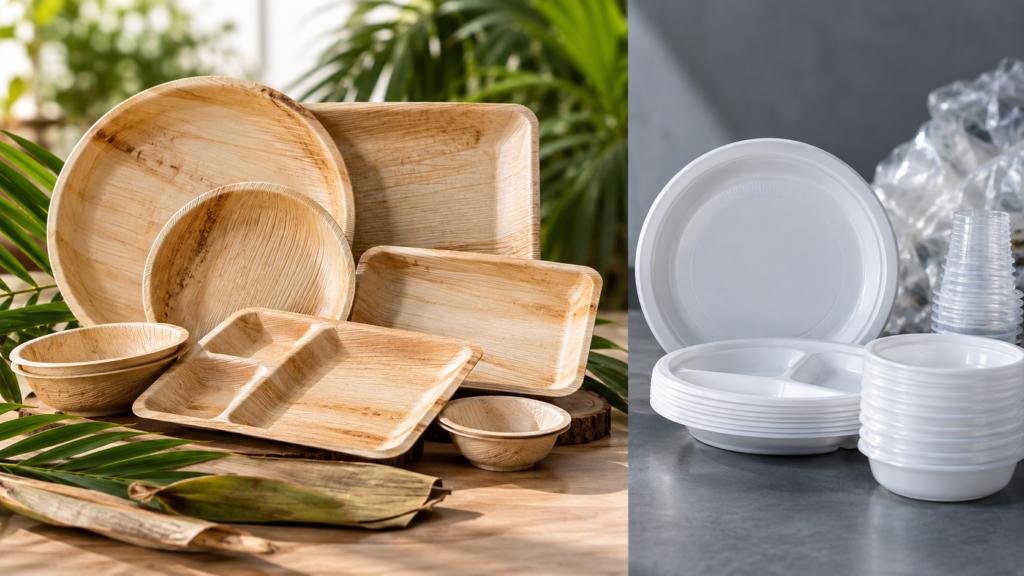
When businesses choose disposable tableware, the decision is no longer based only on price and convenience. Environmental considerations are becoming increasingly important for restaurants, caterers, hotels, food-service companies, event organisers, retailers and importers.
Among the available plastic alternatives, areca leaf plates have gained attention as a natural option. But how do they actually compare with conventional plastic plates?
This article compares areca leaf plates vs plastic plates from the perspective of materials, biodegradability, disposal, functionality and suitability for businesses looking for sustainable tableware.
What Are Areca Leaf Plates?
Areca leaf plates are made from naturally fallen areca palm leaf sheaths. The collected sheaths are cleaned, dried, heat-pressed into different shapes and finished as natural tableware.
Unlike conventional plastic tableware, the finished product does not need synthetic plastic resin as its primary structural material.
What Are Plastic Plates?
Plastic plates are generally manufactured from synthetic polymers. Depending on the product, materials can include polypropylene, polystyrene or other plastic polymers.
Plastic offers several practical characteristics, including low weight, consistent shapes, moisture resistance and durability. These properties have contributed to its widespread use in disposable tableware.
However, conventional plastic presents a major environmental challenge because many plastic products persist in the environment for very long periods and can contribute to plastic pollution when improperly managed.
Are Areca Leaf Plates Biodegradable?
One of the most important differences when comparing areca leaf plates vs plastic plates is what happens to the material after use.
Because areca plates are made primarily from natural plant material, they can biodegrade under suitable environmental conditions. Their end-of-life behaviour is therefore fundamentally different from conventional plastic.
Plastic, in contrast, generally does not biodegrade in the same way. Depending on the polymer and environmental conditions, it can remain in the environment for extended periods and may eventually fragment into smaller pieces.
For businesses trying to reduce dependence on conventional plastic, biodegradable plates made from natural materials can therefore be an important alternative.
Are Areca Leaf Plates Compostable?
Compostable tableware is designed to break down under specified composting conditions. However, it is important not to assume that every natural-looking product automatically meets every compostability standard.
The actual end-of-life performance of areca leaf plates depends on factors such as material composition, processing and the composting environment.
Businesses sourcing eco-friendly tableware should therefore check the supplier’s product specifications and any applicable testing or certification documentation rather than relying solely on marketing claims.

Areca Leaf Plates vs Plastic Plates: Environmental Comparison
| Factor | Areca Leaf Plates | Plastic Plates |
|---|---|---|
| Primary material | Natural fallen areca leaf sheath | Synthetic plastic polymer |
| Appearance | Natural texture and colour | Uniform manufactured appearance |
| Biodegradability | Can biodegrade under suitable conditions | Conventional plastic generally does not biodegrade |
| Renewable material | Uses naturally fallen plant material | Based on synthetic polymer production |
| End-of-life considerations | Can be suitable for organic waste/composting systems where conditions permit | Requires appropriate plastic waste management |
| Plastic-free option | Yes, when genuinely plastic-free | No |
| Typical positioning | Eco-friendly tableware | Conventional disposable tableware |
The table highlights why areca leaf plates are increasingly considered among the plastic alternatives available to food-service businesses.
What About Manufacturing and Transportation?
Sustainability is broader than simply asking whether a plate is biodegradable.
A responsible comparison should consider the entire product lifecycle, including raw materials, processing, packaging, transportation, use and disposal.
Areca leaf plates use a naturally occurring agricultural material, while plastic plates require synthetic polymer production. However, transportation also matters: products shipped over long distances have associated transport impacts.
For international buyers, this means that sustainable tableware should ideally be evaluated using multiple criteria rather than a single environmental claim.
Are Areca Leaf Plates Practical for Food Service?
Sustainability alone is not enough. Commercial tableware must also perform reliably.
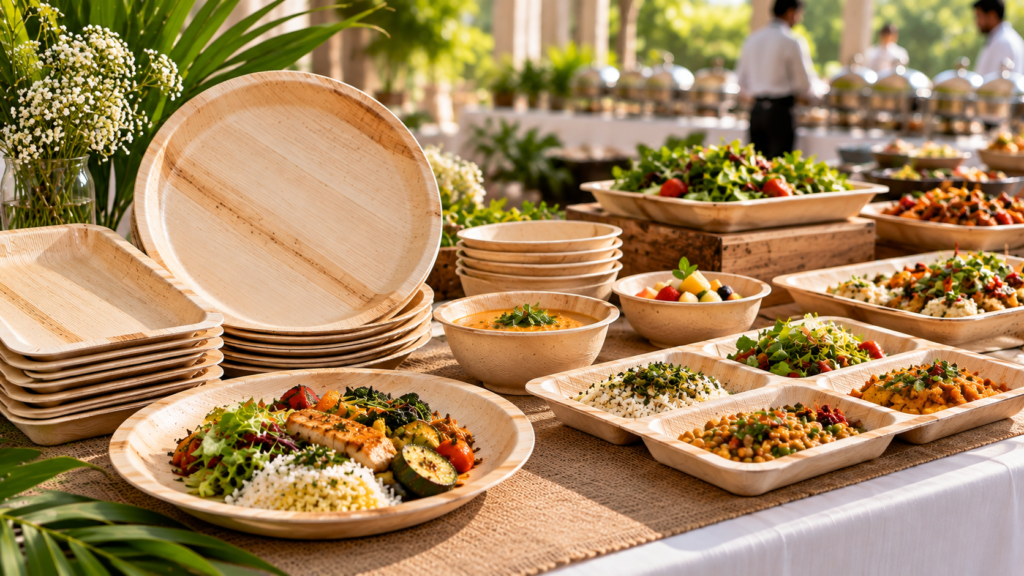
Good-quality areca palm leaf tableware can be available in several practical formats, including round plates, square plates, rectangular plates, compartment plates, bowls and serving trays.
Their natural appearance can also suit restaurants, catering businesses, hospitality operations, events and food-service applications seeking a more natural presentation.
Why Are Businesses Looking for Plastic Alternatives?
Growing interest in plastic-free alternatives is encouraging businesses to reconsider traditional disposable products.
Restaurants and caterers may want tableware that better aligns with their sustainability objectives. Hospitality companies may want natural-looking products for specific events or guest experiences. Importers and distributors may also be expanding their portfolios with eco-friendly plates and other sustainable products.
For these businesses, the decision is not necessarily about eliminating every conventional material immediately. It is about identifying applications where a suitable natural alternative can perform effectively.
Choosing the Right Sustainable Tableware
When evaluating areca leaf plates vs plastic plates, buyers should consider:
- Material composition
- Product strength and intended use
- Plate dimensions and designs
- Moisture and food-use requirements
- Packaging requirements
- Storage conditions
- Disposal infrastructure in the destination market
- Applicable regulations and certifications
- Supplier consistency and export capability
For international buyers, requesting product samples before placing a bulk order can also help evaluate appearance, dimensions, finish and performance.
The Bottom Line
The comparison between areca leaf plates vs plastic plates involves more than appearance or price.
Areca leaf plates provide a natural, plastic-free tableware option made from fallen areca palm leaf sheaths. Under appropriate conditions, they can biodegrade, making them relevant to businesses exploring biodegradable plates, eco-friendly tableware and other plastic alternatives.
Plastic plates continue to offer practical characteristics such as consistency, durability and moisture resistance, but conventional plastic creates different end-of-life and pollution challenges.
For businesses considering a transition toward sustainable tableware, the most useful approach is to evaluate material, performance, lifecycle and disposal requirements together.
Explore Natural Areca Palm Leaf Tableware
R2S GREENWAVE is an Indian merchant exporter and export sourcing partner supplying natural areca palm leaf tableware for international B2B buyers, including importers, distributors, wholesalers, HORECA suppliers and food-service businesses.
Website: www.r2sgreenwave.com
Email:eco@r2sgreenwave.com | contact@r2sgreenwave.com
Contact / WhatsApp: +91 9972992611 / 7676893233