 +91-9972 9926 11 / 7676 8932 33
 contact@r2sgreenwave.com / eco@r2sgreenwave.com

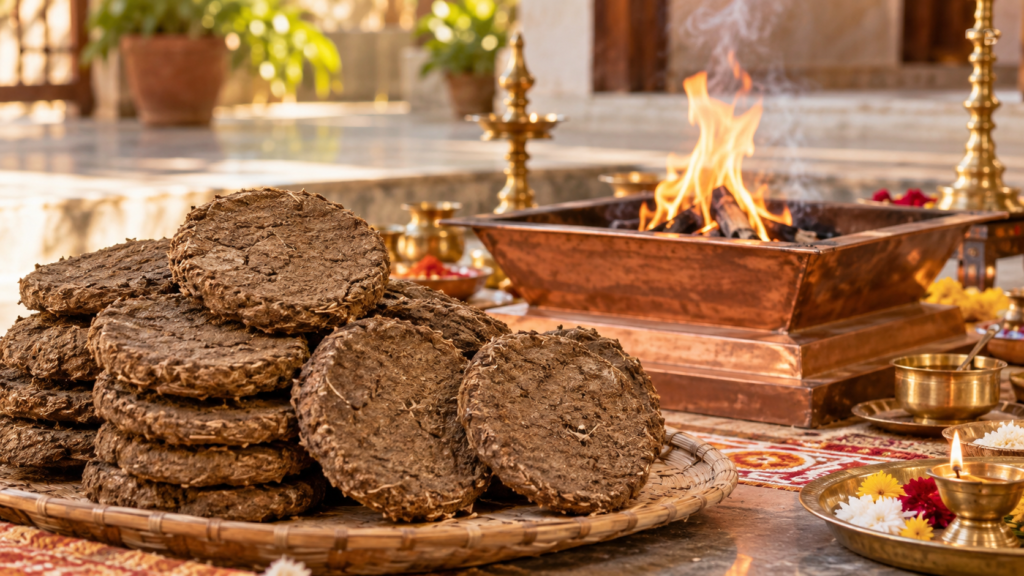
Across India, traditional rituals often incorporate natural materials that have been used for generations. Among these, cow dung cakes—also known as Gobar cakes or Upla in different regions—hold an important place in several traditional practices.
The use of cow dung cakes for Havan and Puja is particularly associated with rituals involving sacred fire. When properly prepared and dried, these traditional products are used as a natural combustible material during certain Havan rituals, religious ceremonies and cultural practices.
For international buyers, cultural-product businesses and those interested in Indian traditions, understanding the traditional role of Gobar cakes for Havan provides useful context about this distinctive Indian product.
What Are Cow Dung Cakes?
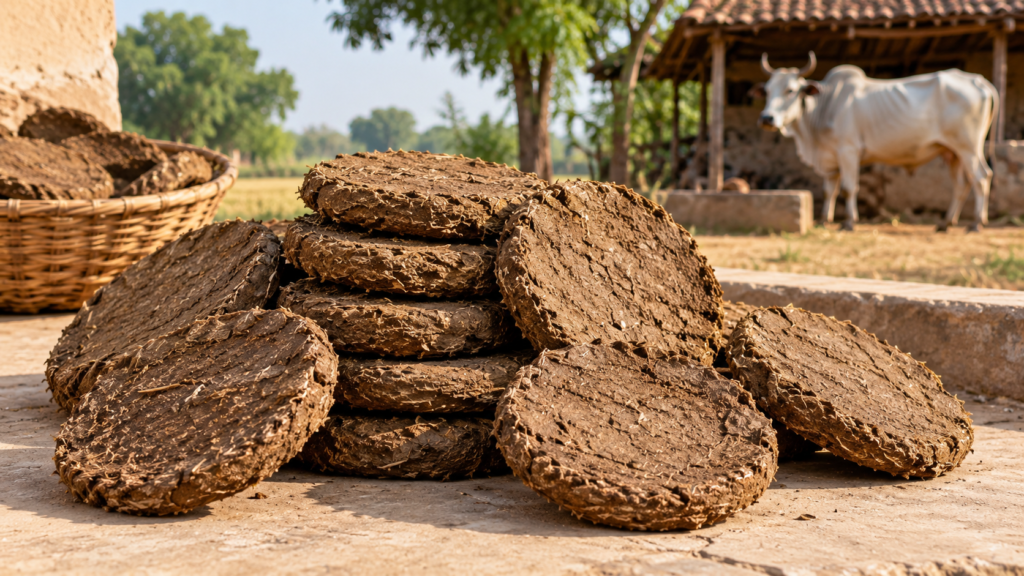
Cow dung cakes are traditionally prepared by shaping fresh cow dung into flat or slightly rounded handmade forms and allowing them to dry naturally in sunlight.
Depending on the region and traditional method, their size, thickness and shape can vary. Properly sun-dried cow dung cakes generally have a dry, earthy appearance and a naturally fibrous texture.
The traditional preparation process is relatively simple: the material is collected, shaped manually and placed in a suitable location for sun-drying. Once sufficiently dried, the cakes can be stored in a dry environment for appropriate traditional uses.
Traditional Use of Cow Dung Cakes in Havan

One of the best-known traditional applications is their use as Havan fuel.
A Havan, also called Homa or Yajna in different traditions, is a Hindu ritual involving a sacred fire. Various materials may be offered into the fire according to the specific ritual tradition, region and ceremony.
In some traditional practices, cow dung cakes for Havan are used to help establish or maintain the sacred fire. Their use is connected with long-established customs surrounding the use of natural materials in religious ceremonies.
The exact materials and procedure can differ significantly according to family traditions, regional customs and the particular type of Havan being performed.
Cow Dung Cakes for Puja and Religious Rituals
Although Havan is the most recognizable application, Puja cow dung cakes can also be associated with broader religious and cultural practices.
In certain communities, dried cow dung is traditionally used in preparation for festivals, household rituals and ceremonial activities. The practice varies considerably across India.
It is therefore important to understand cow dung cakes for religious rituals as a cultural product whose applications depend on local customs rather than assuming that every Puja follows the same procedure.
For traditional practitioners, the significance of these products comes from their connection with longstanding Indian customs and ritual practices.
Why Are Cow Dung Cakes Traditionally Used?
The traditional use of Gobar cakes for Havan is closely connected with the historical availability of natural materials in rural India.
Before modern fuels became widely accessible, agricultural communities relied heavily on locally available biomass materials. Dried cow dung could be prepared and stored for later use.
Over generations, this practical use became intertwined with cultural and religious traditions in some communities.
Consequently, traditional Havan fuel made from dried cow dung represents both an example of historical biomass use and a material associated with particular Indian religious practices.
How Are Cow Dung Cakes Prepared?
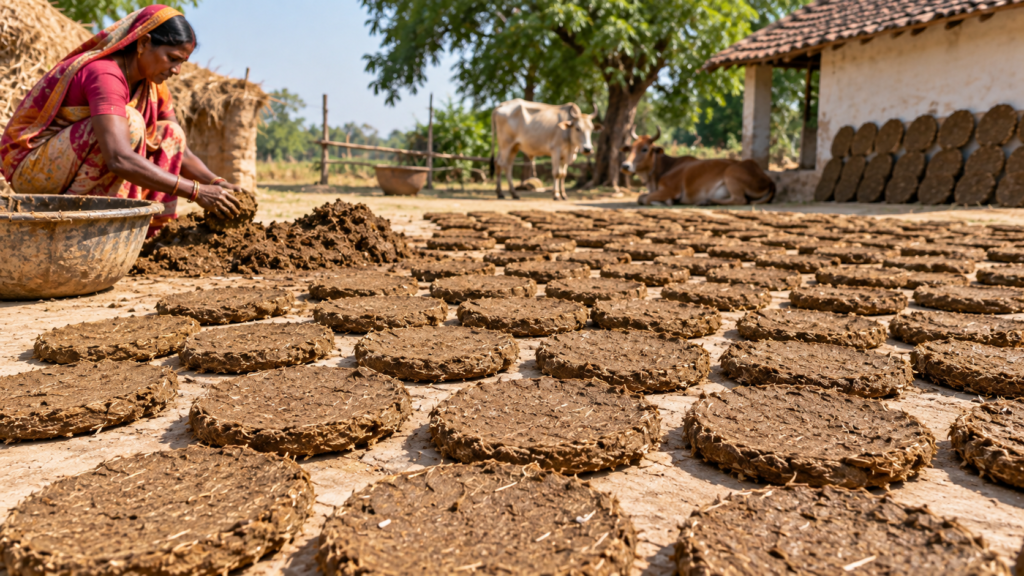
Traditional preparation generally involves several stages:
- Collection: Fresh cow dung is collected using appropriate hygienic practices.
- Shaping: The material is manually formed into traditional flat or rounded cakes.
- Sun-drying: The shaped cakes are placed in sunlight and allowed to dry thoroughly.
- Inspection: Properly dried pieces are separated from those that have not dried adequately.
- Storage: Finished sun-dried cow dung cakes are stored in a clean, dry and ventilated environment.
Traditional preparation methods may differ according to location and household practice.
For commercial supply, appropriate handling, packaging, storage and applicable local regulations should be considered carefully.
Cultural Significance in Indian Traditions
The cultural importance of cow dung cakes is connected with the longstanding significance of cattle and natural materials within many Indian communities.
In traditional Hindu practices, the cow has a significant cultural and religious association. This broader cultural context helps explain why products made from cow dung appear in certain traditional practices.
However, customs differ across regions, communities and religious traditions. Therefore, the use of cow dung cakes for Havan and Puja should be understood within its specific cultural context rather than treated as a universal practice.
Storage and Handling
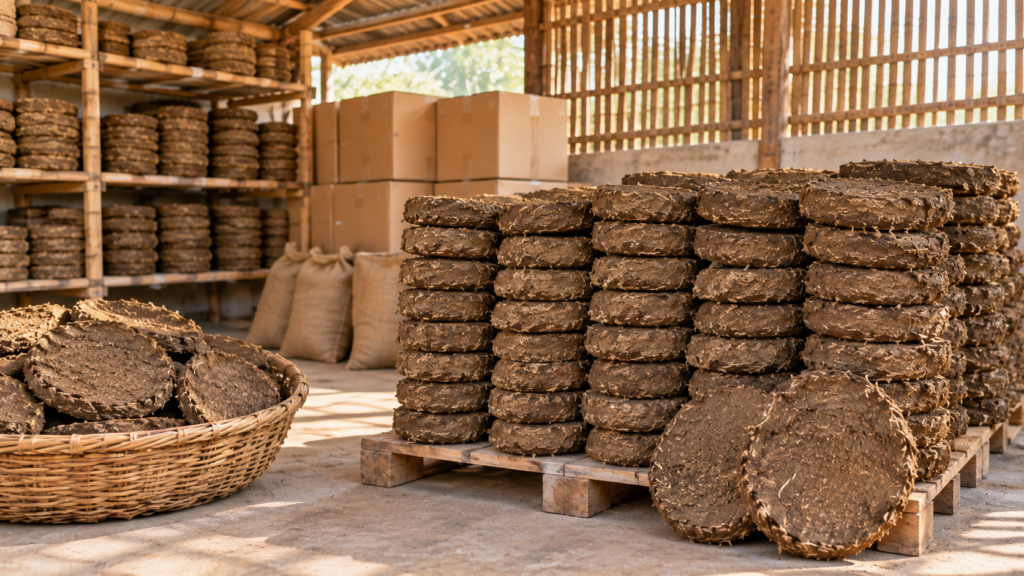
Proper storage is particularly important for sun-dried cow dung cakes.
They should be kept in a clean, dry and well-ventilated environment, protected from moisture. Exposure to humidity can affect the condition of dried biomass products.
For international or commercial supply, packaging should be selected according to the intended market, transportation requirements and applicable regulations.
Buyers should also verify the import, customs, sanitary and other applicable requirements of their destination country before placing an order.
Cow Dung Cakes as a Traditional Indian Export Product
Growing international interest in Indian cultural products has created opportunities for businesses supplying traditional items to overseas markets.
Cow dung cakes for Havan may be relevant to specialist importers, religious-product distributors, cultural-product retailers and businesses serving Indian communities abroad.
For exporters, however, product specifications, packaging, documentation and destination-country regulations should always be checked before shipment.
At R2S GREENWAVE, we focus on connecting international buyers with selected Indian products and export-sourcing opportunities. Our approach emphasizes clear product information and responsible communication with overseas buyers.
Final Thoughts
Cow dung cakes for Havan and Puja represent a distinctive example of how traditional Indian materials continue to have cultural relevance today.
From their handmade preparation and natural sun-drying to their association with Havan rituals, these products reflect longstanding practices that vary across India’s diverse communities.
For buyers interested in traditional Indian products, understanding their cultural background, preparation and appropriate handling is an important part of responsible sourcing.