 +91-9972 9926 11 / 7676 8932 33
 contact@r2sgreenwave.com / eco@r2sgreenwave.com


Cow dung cakes, also known as gobar cakes or cow dung patties, have been part of traditional Indian rural life, agriculture and religious practices for centuries. Made by shaping and naturally sun-drying cow dung, these traditional products continue to have cultural and practical relevance in India.
The connection between cow dung and Ayurveda is often discussed in the broader context of traditional Indian knowledge systems. Cow-derived materials also appear in the traditional concept of Panchagavya, which includes milk, curd, ghee, urine and dung. Research and documentation under India’s AYUSH system continue to examine traditional practices and their historical context.
However, it is important to distinguish traditional applications from modern medical evidence. Cow dung cakes should not be presented as a proven medical treatment or as a substitute for professional healthcare. Their most established contemporary relevance is cultural, ritual, agricultural and biomass-related.
What Are Cow Dung Cakes?

Cow dung cakes are traditionally produced by shaping fresh cow dung into flat or slightly rounded patties and allowing them to dry naturally under sunlight.
The traditional production process is relatively simple:
- Fresh cow dung is collected.
- It is shaped manually into cakes or patties.
- The cakes are placed in sunlight.
- Natural drying reduces their moisture content.
- Once adequately dried, they can be stored in a dry environment.
Authentic sun-dried cow dung cakes generally have an earthy brown appearance, irregular handmade shapes and a fibrous natural texture.
For international buyers, these characteristics are also important because they distinguish a traditional natural product from industrially manufactured biomass products.
Cow Dung in Ayurveda and Traditional Indian Knowledge

The relationship between cattle-derived materials and Indian traditional knowledge is broader than the use of cow dung cakes alone.
In traditional literature and practices, cow-derived substances have been associated with Panchagavya and various cultural, agricultural and traditional applications. The Ministry of AYUSH maintains dedicated research and knowledge resources covering Ayurveda and other Indian systems of traditional medicine.
It is therefore more accurate to describe cow dung cakes in Ayurveda as part of a wider traditional knowledge and cultural ecosystem rather than suggesting that burning or consuming cow dung cakes has been clinically established to treat diseases.
This distinction is particularly important when discussing the product with international customers.
Traditional Uses of Cow Dung Cakes

1. Havan and Religious Rituals
One of the best-known applications of gobar cakes is in traditional Indian religious ceremonies.
Cow dung cakes for Havan may be used as a natural combustible material in traditional fire rituals. They can also form part of ceremonial practices associated with Hindu festivals, prayers and household rituals.
Their use is connected to long-standing Indian cultural traditions rather than modern pharmaceutical applications.
2. Puja and Cultural Practices

Cow dung cakes for Puja are used in certain traditional and regional religious practices.
Their significance varies according to community, region and ritual tradition. In rural India, cow dung has historically been closely connected with household and ceremonial practices.
Today, dried cow dung products are also being marketed internationally as traditional Indian cultural products.
3. Traditional Biomass Fuel

Another practical application of sun-dried cow dung cakes is their use as biomass fuel.
Before modern fuels became widely available, dried cattle dung was commonly used in rural households as a cooking and heating fuel. Even today, dried cow dung remains relevant in certain rural communities and traditional settings.
As a biomass material, its suitability depends on local regulations, intended application, ventilation and safe handling.
4. Agricultural and Rural Applications
Cow dung has historically played an important role in traditional Indian agriculture.
Fresh or processed cattle manure can contribute organic matter to agricultural systems. However, dried cow dung cakes intended for ritual or fuel markets should not automatically be described as agricultural fertilizer unless they have been appropriately processed and are legally suitable for that application.
This distinction is important for responsible product communication.
Are Cow Dung Cakes a Medicine?
This is an important question when discussing cow dung cakes in Ayurveda.
Traditional Indian knowledge contains numerous references to cattle-derived substances, and modern institutions such as CCRAS continue to document and research traditional practices.
However, traditional use does not automatically establish modern clinical effectiveness.
Therefore, claims that cow dung cakes cure diseases, treat infections, detoxify the body, or provide specific medical benefits should not be made without appropriate scientific evidence.
For responsible B2B marketing, it is preferable to describe them as a traditional Indian natural product, ritual product, cultural product, or traditional biomass product, depending on the intended market and application.
Why Are Sun-Dried Cow Dung Cakes Still Relevant?
Interest in traditional natural products has expanded beyond domestic markets.
International consumers increasingly encounter Indian cultural products through yoga, Ayurveda, Indian festivals, spiritual practices and ethnic retail channels.
This has created potential interest in products such as:
- Natural cow dung cakes
- Sun-dried cow dung cakes
- Gobar cakes
- Traditional Havan materials
- Puja products
- Indian cultural products
- Traditional biomass products

For exporters, accurate product descriptions and appropriate packaging are particularly important.
Buying and Exporting Traditional Cow Dung Cakes
International buyers evaluating cow dung cakes should consider several practical factors.
Product consistency
Buyers may look for consistent size, shape, dryness and packaging.
Moisture control
Because cow dung cakes are naturally porous, they should be stored in dry conditions and protected from moisture during transportation.
Packaging
Suitable packaging can help reduce exposure to humidity, contamination and physical damage during handling.
Regulatory requirements
Import requirements can vary considerably between countries. Animal-derived products may be subject to customs, biosecurity, quarantine or sanitary regulations.
Exporters should therefore verify the requirements of the destination country before shipping.
Accurate product claims
International B2B buyers generally benefit from clear information about:
- Product composition
- Production method
- Intended traditional use
- Packaging
- Storage conditions
- Country of origin
- Applicable export documentation
Traditional Product, Modern Export Opportunity
The story of cow dung cakes in Ayurveda is ultimately part of a much larger story about India’s traditional natural products.
From Havan and Puja to traditional rural biomass applications, cow dung cakes have served practical and cultural purposes across generations.
For international markets, their strongest positioning is often as a traditional Indian cultural product rather than a pharmaceutical product.
At R2S GREENWAVE, we focus on connecting international buyers with carefully sourced Indian natural products while emphasizing transparent product information and responsible export communication.
Conclusion
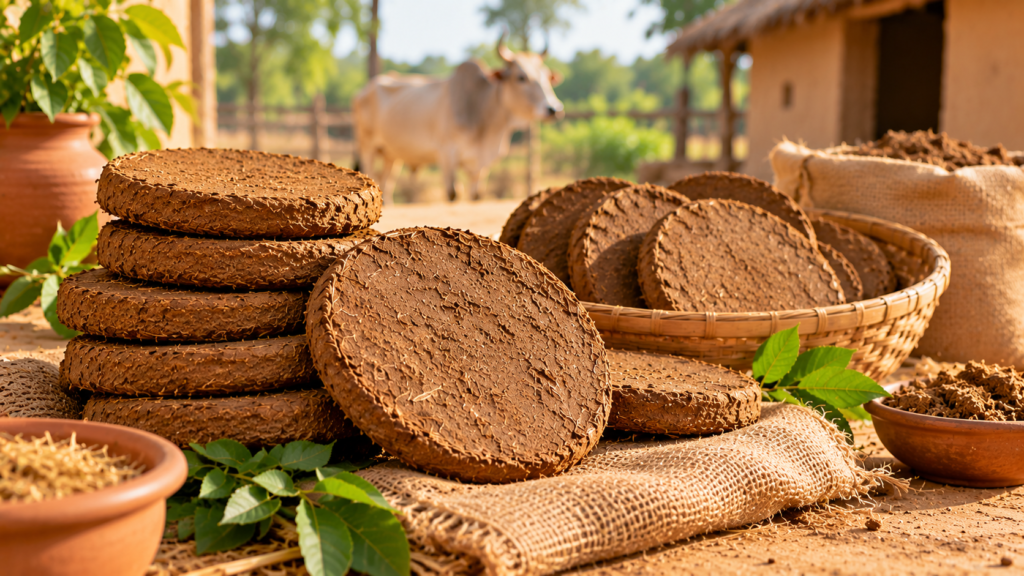
Cow dung cakes occupy a distinctive place in India’s traditional cultural landscape. Their association with Ayurveda, Panchagavya, religious rituals, rural practices and traditional biomass reflects the long-standing importance of cattle-derived materials in Indian society.
While traditional knowledge deserves to be documented and understood, modern health claims should always be supported by appropriate scientific evidence.
For international buyers, sun-dried cow dung cakes can represent a unique Indian natural and cultural product with applications connected to traditional rituals, Havan, Puja and biomass use, subject to the regulations of the destination market.
Understanding their history, traditional applications and practical characteristics can help buyers make informed decisions when sourcing authentic gobar cakes from India.