 +91-9972 9926 11 / 7676 8932 33
  contact@r2sgreenwave.com / eco@r2sgreenwave.com
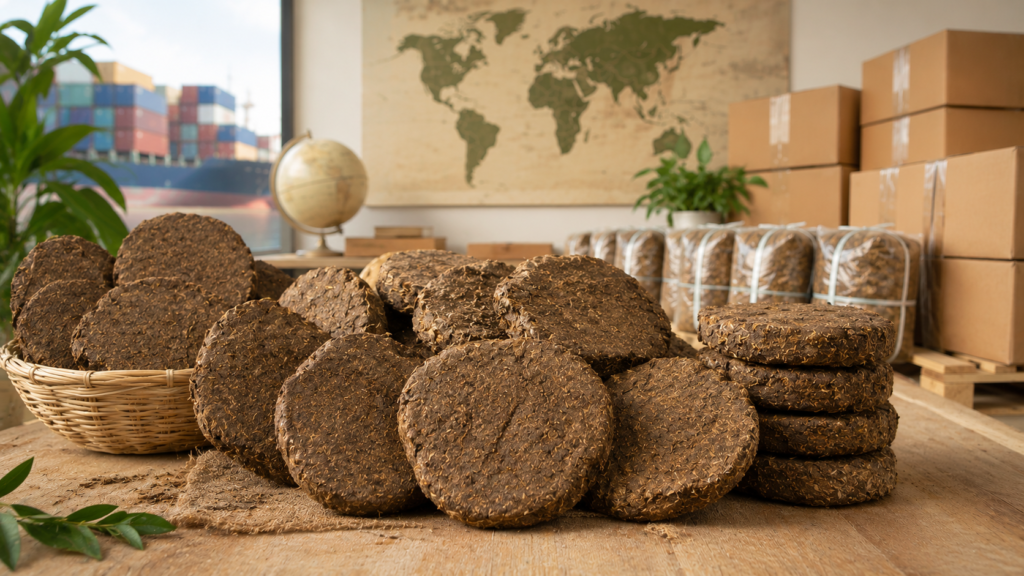
India has a long tradition of using cow dung cakes, commonly known as gobar cakes, for religious rituals, traditional fuel applications and other uses. Today, international buyers are increasingly exploring Indian suppliers for this traditional natural product.
For importers, wholesalers, distributors, retailers and businesses sourcing cow dung cakes internationally, however, buying is about more than finding a supplier. Product specifications, drying condition, packaging, quantity, intended application, documentation and destination-country requirements all need to be considered.
This guide explains what international buyers should know when sourcing cow dung cakes from India and how to evaluate a suitable cow dung cakes expo
What Are Cow Dung Cakes?
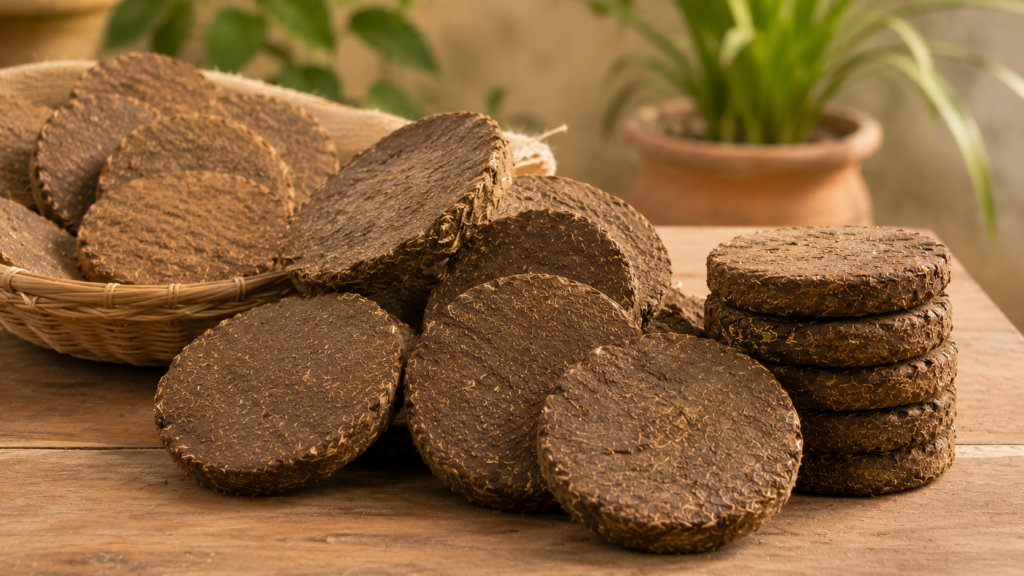
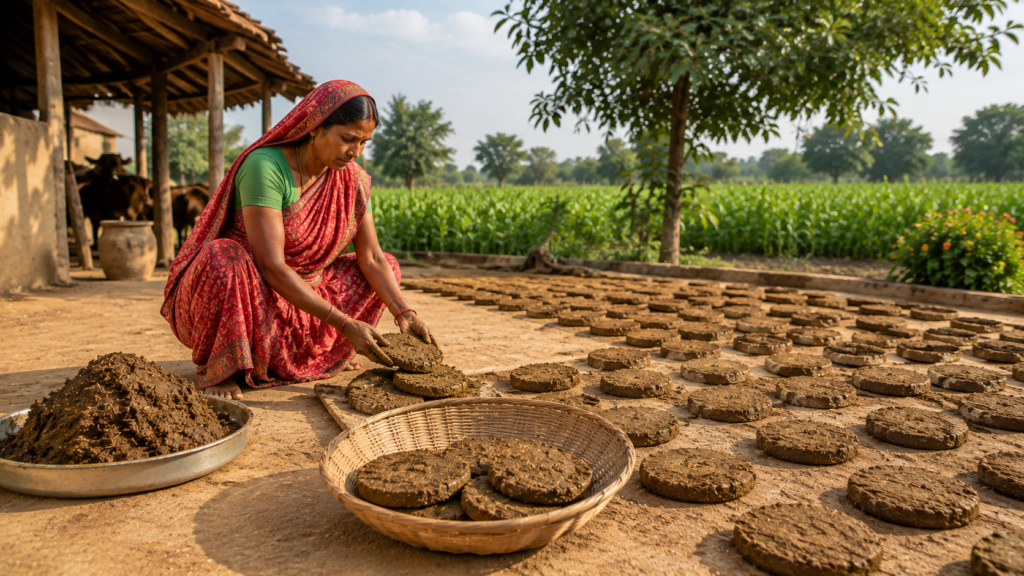
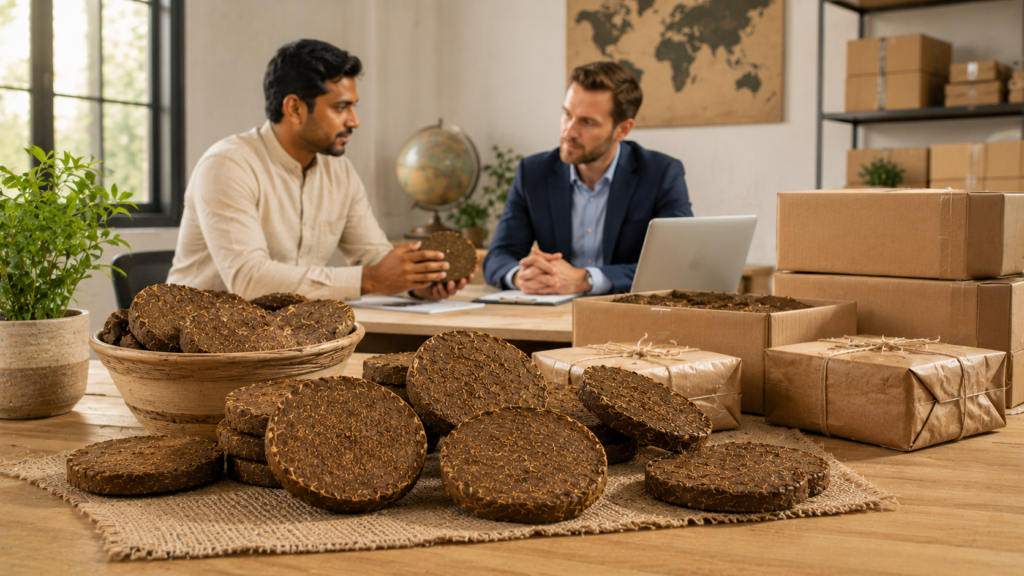
Cow dung cakes are traditionally prepared by shaping cow dung into flat, round or other specified forms and allowing them to dry naturally. In India, they are commonly referred to as gobar cakes or uplas, depending on the region.
Traditionally, dried cow dung cakes have been used in household and cultural practices, including havan and pooja rituals, as well as certain traditional fuel applications. Their form, size, thickness, weight and drying condition can vary according to the supplier and intended use.
For international procurement, buyers should therefore request clear product specifications rather than relying only on general product descriptions.
Why Do International Buyers Source Cow Dung Cakes from India?
India has established traditional knowledge and supply networks around cow dung-based products, making it a natural sourcing market for buyers interested in these products.
International demand may come from different types of businesses and organizations, including:
- Religious and cultural product retailers
- Wholesale distributors
- Specialty stores
- Importers of traditional Indian products
- Businesses serving South Asian communities overseas
- Buyers seeking products for specified traditional applications
The exact requirements can differ considerably between buyers. A retail customer may require smaller, neatly packed quantities, while a wholesaler or distributor may be more interested in bulk supply and customized packaging.
What Should Buyers Check Before Importing Cow Dung Cakes?
Before placing a bulk order with a cow dung cake exporter in India, buyers should establish the product specifications clearly.
1. Product Specifications
Ask the supplier to provide information such as:
- Shape and approximate dimensions
- Approximate weight per piece
- Thickness
- Colour and natural appearance
- Drying condition
- Packaging format
- Number of pieces per pack or carton
Consistency is particularly important for commercial buyers who intend to resell the product.
2. Intended Application
Tell the supplier how the product will be used. Requirements may differ for havan and pooja, retail sale, wholesale distribution or other intended applications.
Providing this information at the quotation stage allows the exporter to discuss the most appropriate product presentation and packaging.
3. Samples Before Bulk Procurement
For first-time international sourcing, requesting samples can be useful. A sample allows the buyer to evaluate the physical appearance, dimensions, dryness, packaging and overall suitability before committing to a larger order.
The final bulk specification should be agreed upon clearly so that both buyer and supplier have the same understanding of the order.
How to Source Cow Dung Cakes from an Indian Exporter
A straightforward sourcing process can help international buyers reduce misunderstandings.
Step 1: Define your requirement.
Specify the quantity, preferred dimensions, packaging, intended application and destination country.
Step 2: Identify suitable suppliers.
Look for an Indian cow dung cakes exporter or supplier capable of handling your required quantity and communicating clearly about the product.
Step 3: Request specifications and samples.
Ask for product details, photographs, packaging information and samples where appropriate.
Step 4: Confirm commercial terms.
Discuss quantity, MOQ, packaging, pricing, payment terms and shipping arrangements before placing the order.
Step 5: Check destination-market requirements.
Import requirements can vary by country and may depend on the product, intended use and classification. Buyers should verify the applicable requirements with their local authorities, customs adviser or import agent before shipment.
Export Packaging for Cow Dung Cakes
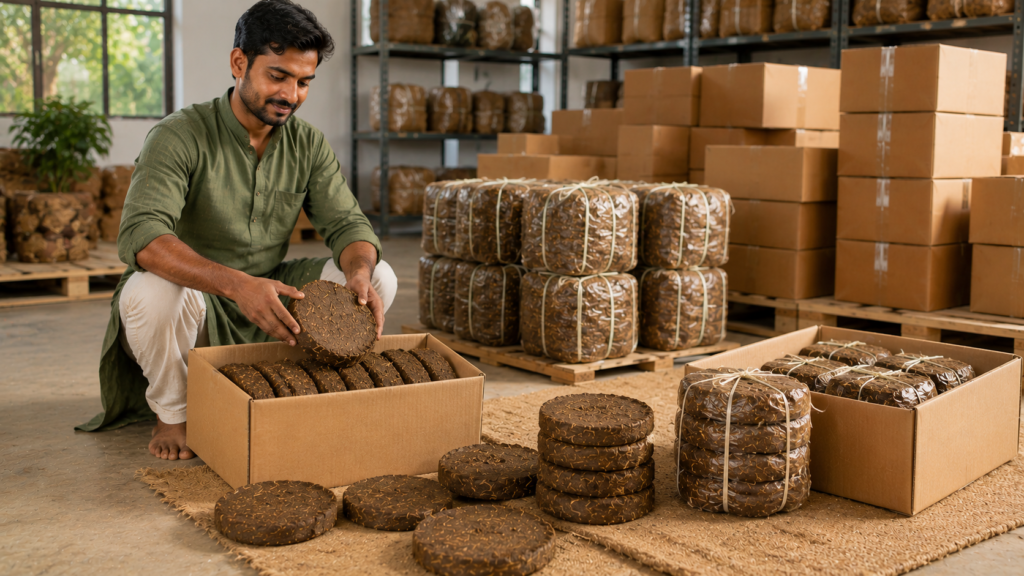
Packaging is an important consideration when sourcing dried cow dung cakes internationally.
The packaging should help protect the product during handling, storage and transportation while being appropriate for the agreed quantity and destination. Depending on the order, buyers may discuss bulk bags, cartons, inner packs or other suitable formats with the supplier.
International buyers should also confirm:
- Pack and carton dimensions
- Pieces or weight per package
- Outer packaging
- Labelling requirements
- Storage instructions
- Palletization, where applicable
- Whether retail or bulk packaging is required
Packaging should ultimately be agreed according to the product specification, shipping requirements and destination-market expectations rather than assumed to be identical for every shipment.
Documents and Compliance: What Should Buyers Verify?
Export documentation and import requirements should be treated as an important part of the sourcing process.
The exact requirements can vary according to the destination country, product classification, intended use, quantity and applicable regulations. Buyers should therefore verify the requirements that apply to their particular shipment before confirming an order.
The applicable tariff or HS classification should also be verified for the specific product rather than copied from another supplier’s listing.
An experienced exporter can coordinate commercially required export documentation, but the importer should remain responsible for confirming the requirements applicable in the destination market.
How to Choose the Right Cow Dung Cakes Exporter in India
Choosing a supplier should go beyond comparing the lowest quotation.
International buyers should consider whether the supplier can provide:
- Clear and consistent product specifications
- Transparent packaging information
- Samples when required
- Realistic minimum order quantities
- Consistent communication
- Bulk-order capability
- Appropriate export coordination
- Clear commercial terms
- Product consistency between approved samples and bulk orders
A supplier who understands the buyer’s application and destination requirements can make international sourcing considerably easier.
Why Source Cow Dung Cakes from R2S GREENWAVE?
R2S GREENWAVE is an Indian B2B exporter and supplier of natural products, working with buyers seeking Indian-origin products for international markets.
For buyers interested in cow dung cakes from India, the sourcing discussion can begin with the basic requirements: product specifications, quantity, intended application, packaging preferences and destination.
This buyer-first approach helps establish clear expectations before moving toward sampling, quotation and bulk procurement.
Looking to source cow dung cakes from India?
Call/WhatsApp: +91 9972992611 | +91 7676893233
Website: www.r2sgreenwave.com
Email: eco@r2sgreenwave.com | contact@r2sgreenwave.com
Frequently Asked Questions
Can cow dung cakes be exported from India?
Cow dung cakes are traded internationally, but the requirements for a particular shipment can vary by destination country, product classification and intended use. Buyers should verify applicable import requirements before ordering.
What should international buyers check before ordering cow dung cakes?
Buyers should confirm product dimensions, approximate weight, drying condition, packaging, quantity, intended application, commercial terms and destination-country requirements.
How are cow dung cakes packaged for export?
Packaging can vary according to the quantity, product requirements and destination. Buyers should discuss suitable inner and outer packaging, labelling and transportation requirements with the exporter.
What information should I provide when requesting a quotation?
Provide the required quantity, preferred product specifications, intended application, packaging preference, destination country and any specific buyer or retail requirements. This allows the exporter to prepare a more relevant quotation.